Buy marktwirtschaft.eu ?
We are moving the project
marktwirtschaft.eu .
Are you interested in purchasing the domain
marktwirtschaft.eu ?
domain@kv-gmbh.de · 0541-91531010
Buy marktwirtschaft.eu ?
What is a temporal clause?
A temporal clause is a type of subordinate clause that provides information about when an action takes place in relation to the main clause. It usually includes a time-related word or phrase, such as "when," "while," "after," "before," or "since." Temporal clauses help to clarify the timing of events in a sentence and are commonly used in complex sentences to show the sequence of actions. **
What is the temporal context?
The temporal context refers to the time period or timeframe in which an event, situation, or piece of information occurs or is relevant. It helps to provide a framework for understanding the sequence of events and the historical or current significance of a particular topic. Understanding the temporal context is important for interpreting and analyzing information accurately within its historical or current timeframe. **


Similar search terms for Temporal
Top-Angebote
Products related to Temporal:
-
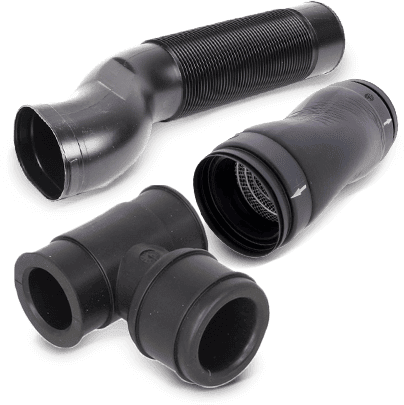
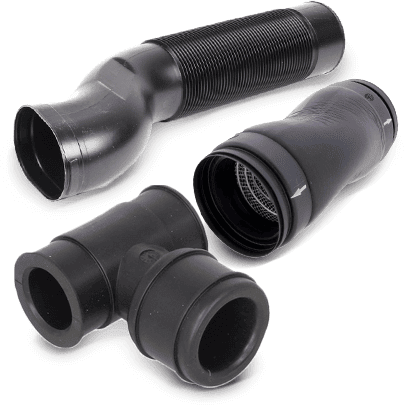
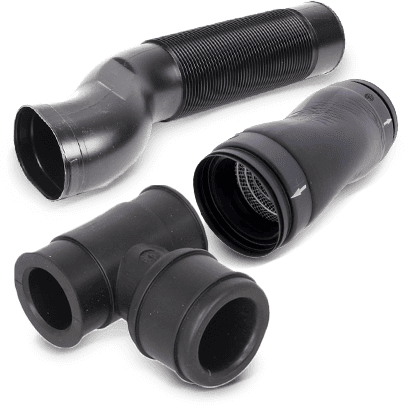
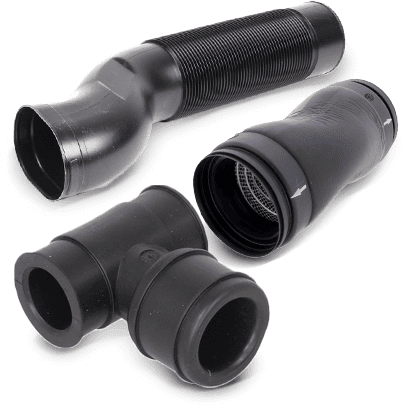
METZGER 2389059 Hose, air supplyAir Supply Hoses/Pipes: from the connecting pipe to the turbocharger; Fitting Position: Inlet; for PR number: TD6, TQ2, TE6, TA9; TecDoc Engine Number: 20797, 20795, 22663, 22666, 22170, 20732, 22172, 22171, 20733, 22641, 20943, 22181; Model Year to: 2011, 2014; Model Year from: 2012, 201513,99 £*Shipping: 8,45 £Secure redirect to the provider
-
METZGER 2388091 Hose, air supplyAir Supply Hoses/Pipes: from the air filter to the turbocharger; Supplementary Article / Supplementary Info: with mass air flow sensor, with gaskets/seals; Number of sensors: 2; Connector Shape: oval; for special equipment code: M014, F218, FX, 805, FC, F212, F207, M005, U77, 801, 802, 803, 804, F166, F222, F463; Production date to: 05.07.2013, 26.11.2013, 22.01.2016, 22.11.2016; Vehicle Identification Number (VIN) from: 41478836; Production date from: 05.07.2013, 02.11.2009, 26.11.2013; not for special equipment code: U42; TecDoc Engine Number: 23792, 26600, 24810, 25098, 26045, 23810; for combined special equipment code (SA Code): F218+FX+M014+805, F218+FC+M014, F222+M014, 828+F222+M014, 926+F222+M014; Country Specific Design: Canada, USA327,99 £*Shipping: 1,99 £Secure redirect to the provider
-
METZGER 2388094 Hose, air supplyAir Supply Hoses/Pipes: from the air filter to the turbocharger; Material: Plastic; Supplementary Article / Supplementary Info Info 2: with pressure sensor; for special equipment code: M010; not for special equipment code: A12, 800, 460, 494122,99 £*Shipping: 8,45 £Secure redirect to the provider

-
Why is it not often the case in reality to find a temporal alignment of supply and demand?
It is not often the case to find a temporal alignment of supply and demand in reality because there are many factors that can cause imbalances between the two. For example, demand can fluctuate due to changes in consumer preferences, economic conditions, or seasonal variations, making it difficult for suppliers to accurately predict and align their production schedules. Additionally, supply chains can be disrupted by factors such as transportation delays, production bottlenecks, or unexpected events, further complicating the alignment of supply and demand. Finally, the time it takes for suppliers to adjust their production levels in response to changes in demand can also contribute to the lack of temporal alignment. **
-
How is pricing determined based on supply and demand?
Pricing is determined based on supply and demand through the interaction of buyers and sellers in the market. When the demand for a product or service increases and the supply remains constant, the price tends to rise as buyers are willing to pay more to secure the limited supply. Conversely, when the supply of a product or service increases and the demand remains constant, the price tends to decrease as sellers compete to attract buyers. Ultimately, the equilibrium price is reached where the quantity demanded equals the quantity supplied, and this is where the market price is determined. **
-
What does the term "temporal error" mean?
Temporal error refers to a mistake or discrepancy that occurs in relation to time. It can occur when there is a mismatch between the timing of events or actions, leading to inaccuracies or inconsistencies in the temporal sequence. In computing, temporal errors can occur when there are issues with the timing or synchronization of processes, resulting in incorrect outcomes or behaviors. Identifying and addressing temporal errors is important to ensure the accuracy and reliability of systems and processes. **
-
How are temporal clauses formed in Latin?
Temporal clauses in Latin are formed using subordinating conjunctions such as "cum" (when), "postquam" (after), "dum" (while), and "antequam" (before). These conjunctions are followed by a verb in the subjunctive mood to indicate that the action of the temporal clause is dependent on the action of the main clause. For example, "cum veniat" means "when he/she comes" and "postquam viderit" means "after he/she sees." These temporal clauses are used to express the time relationship between two actions or events. **
How do you form temporal clauses in French?
Temporal clauses in French are formed using subordinating conjunctions such as "quand" (when), "pendant que" (while), "dès que" (as soon as), "avant que" (before), "après que" (after), etc. These subordinating conjunctions are followed by a subject and a verb in the subjunctive mood if the action in the temporal clause has not yet occurred, or in the indicative mood if the action has already taken place. Temporal clauses are used to indicate the timing or sequence of events in relation to the main clause. **
Is there actually a temporal version of homesickness?
Yes, there is a temporal version of homesickness known as "time-sickness." Time-sickness is the feeling of longing for a specific time period in the past, such as childhood or a significant moment in one's life. It can be triggered by nostalgia or a desire to relive happy memories from the past. Time-sickness can lead to feelings of sadness, yearning, and a sense of disconnection from the present moment. **
Top-Angebote
Products related to Temporal:
-
Uplifted Finds Retro Macintosh Aesthetic Clock & Technical Temporal Desktop Logic Retro Macintosh Aesthetic Clock & Technical Temporal Desktop LogicInaugurate a powerful ChronosSanctuary energy for your digital environment with the ultimate 2026 boutiqueintegrated temporal solution. The Retro Macintosh Aesthetic Clock is the premier choice for creating a TechnicalModern or StudioLuxe atmosphere...212,97 $*Shipping: 0,00 $Secure redirect to the provider
-
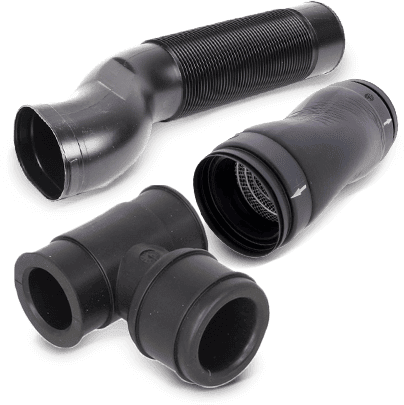
METZGER 2389059 Hose, air supplyAir Supply Hoses/Pipes: from the connecting pipe to the turbocharger; Fitting Position: Inlet; for PR number: TD6, TQ2, TE6, TA9; TecDoc Engine Number: 20797, 20795, 22663, 22666, 22170, 20732, 22172, 22171, 20733, 22641, 20943, 22181; Model Year to: 2011, 2014; Model Year from: 2012, 201513,99 £*Shipping: 8,45 £Secure redirect to the provider
-
What is a temporal clause?
A temporal clause is a type of subordinate clause that provides information about when an action takes place in relation to the main clause. It usually includes a time-related word or phrase, such as "when," "while," "after," "before," or "since." Temporal clauses help to clarify the timing of events in a sentence and are commonly used in complex sentences to show the sequence of actions. **
-
What is the temporal context?
The temporal context refers to the time period or timeframe in which an event, situation, or piece of information occurs or is relevant. It helps to provide a framework for understanding the sequence of events and the historical or current significance of a particular topic. Understanding the temporal context is important for interpreting and analyzing information accurately within its historical or current timeframe. **
-
Why is it not often the case in reality to find a temporal alignment of supply and demand?
It is not often the case to find a temporal alignment of supply and demand in reality because there are many factors that can cause imbalances between the two. For example, demand can fluctuate due to changes in consumer preferences, economic conditions, or seasonal variations, making it difficult for suppliers to accurately predict and align their production schedules. Additionally, supply chains can be disrupted by factors such as transportation delays, production bottlenecks, or unexpected events, further complicating the alignment of supply and demand. Finally, the time it takes for suppliers to adjust their production levels in response to changes in demand can also contribute to the lack of temporal alignment. **
-
How is pricing determined based on supply and demand?
Pricing is determined based on supply and demand through the interaction of buyers and sellers in the market. When the demand for a product or service increases and the supply remains constant, the price tends to rise as buyers are willing to pay more to secure the limited supply. Conversely, when the supply of a product or service increases and the demand remains constant, the price tends to decrease as sellers compete to attract buyers. Ultimately, the equilibrium price is reached where the quantity demanded equals the quantity supplied, and this is where the market price is determined. **
Similar search terms for Temporal
-
METZGER 2388091 Hose, air supplyAir Supply Hoses/Pipes: from the air filter to the turbocharger; Supplementary Article / Supplementary Info: with mass air flow sensor, with gaskets/seals; Number of sensors: 2; Connector Shape: oval; for special equipment code: M014, F218, FX, 805, FC, F212, F207, M005, U77, 801, 802, 803, 804, F166, F222, F463; Production date to: 05.07.2013, 26.11.2013, 22.01.2016, 22.11.2016; Vehicle Identification Number (VIN) from: 41478836; Production date from: 05.07.2013, 02.11.2009, 26.11.2013; not for special equipment code: U42; TecDoc Engine Number: 23792, 26600, 24810, 25098, 26045, 23810; for combined special equipment code (SA Code): F218+FX+M014+805, F218+FC+M014, F222+M014, 828+F222+M014, 926+F222+M014; Country Specific Design: Canada, USA327,99 £*Shipping: 1,99 £Secure redirect to the provider
-
METZGER 2388094 Hose, air supplyAir Supply Hoses/Pipes: from the air filter to the turbocharger; Material: Plastic; Supplementary Article / Supplementary Info Info 2: with pressure sensor; for special equipment code: M010; not for special equipment code: A12, 800, 460, 494122,99 £*Shipping: 8,45 £Secure redirect to the provider
-
What does the term "temporal error" mean?
Temporal error refers to a mistake or discrepancy that occurs in relation to time. It can occur when there is a mismatch between the timing of events or actions, leading to inaccuracies or inconsistencies in the temporal sequence. In computing, temporal errors can occur when there are issues with the timing or synchronization of processes, resulting in incorrect outcomes or behaviors. Identifying and addressing temporal errors is important to ensure the accuracy and reliability of systems and processes. **
-
How are temporal clauses formed in Latin?
Temporal clauses in Latin are formed using subordinating conjunctions such as "cum" (when), "postquam" (after), "dum" (while), and "antequam" (before). These conjunctions are followed by a verb in the subjunctive mood to indicate that the action of the temporal clause is dependent on the action of the main clause. For example, "cum veniat" means "when he/she comes" and "postquam viderit" means "after he/she sees." These temporal clauses are used to express the time relationship between two actions or events. **
-
How do you form temporal clauses in French?
Temporal clauses in French are formed using subordinating conjunctions such as "quand" (when), "pendant que" (while), "dès que" (as soon as), "avant que" (before), "après que" (after), etc. These subordinating conjunctions are followed by a subject and a verb in the subjunctive mood if the action in the temporal clause has not yet occurred, or in the indicative mood if the action has already taken place. Temporal clauses are used to indicate the timing or sequence of events in relation to the main clause. **
-
Is there actually a temporal version of homesickness?
Yes, there is a temporal version of homesickness known as "time-sickness." Time-sickness is the feeling of longing for a specific time period in the past, such as childhood or a significant moment in one's life. It can be triggered by nostalgia or a desire to relive happy memories from the past. Time-sickness can lead to feelings of sadness, yearning, and a sense of disconnection from the present moment. **
* All prices are inclusive of VAT and, if applicable, plus shipping costs. The offer information is based on the details provided by the respective shop and is updated through automated processes. Real-time updates do not occur, so deviations can occur in individual cases. ** Note: Parts of this content were created by AI.